




Most brands don’t have a content problem—they have an attention problem. Every day, people scroll past hundreds of posts, blogs, and videos without stopping, reacting, or remembering. When attention is limited and competition is endless, marketing success depends on one thing: engaging content that gives people a reason to care!
The modern-day audience craves engaging content capable of adding value to their lives. Churning out content at scale is not the right approach to address the needs of the target audience. Doing so surely helps brands get their content indexed on search engines, but achieving better visibility and high exposure requires you to do something else.
You must think of coming up with content that sounds appealing to netizens and meets the quality criteria perfectly. While constant invention is surely helpful, you also need to add other strategies, such as smart assembly and amplification, to your work toolkit. Doing so will not only help you ensure authenticity and relevance but also make your workflow highly efficient.
However, it is only possible when you work on some strategies. This article explores these strategies in detail and makes you familiar with some tips that will make the process easier for you. Read on to learn more.
#1. Redefine Quality of Engaging Content
When redefining quality, marketers must begin by identifying the outcome engaging content is meant to achieve. Instead of measuring success by visual sophistication or production effort, quality should be evaluated based on whether engaging content captures attention, encourages interaction, and supports a specific marketing objective. Without a clear goal, even well-crafted engaging content can struggle to create meaningful impact
Polished content no longer means quality. In most scenarios, it falls short when it comes to engaging the audience. It is crucial to pay attention to ensuring authenticity and offering value by establishing a genuine connection with the target audience and providing effective insights.
To apply this mindset, engaging content should always be created with intent. Some engaging content is designed to spark conversation through comments, while other engaging content aims to educate, build credibility, or guide the audience toward a next step. When the purpose is clearly defined, quality becomes easier to assess because engaging content is judged by results rather than appearance.
For example, engaging content meant to educate does not need complex visuals to succeed. A straightforward carousel that explains a common industry mistake or a short video sharing one actionable tip can perform strongly if it helps the audience understand something quickly. Similarly, engaging content created to build trust may take the form of personal stories, lessons learned, or honest opinions that feel relatable rather than promotional.
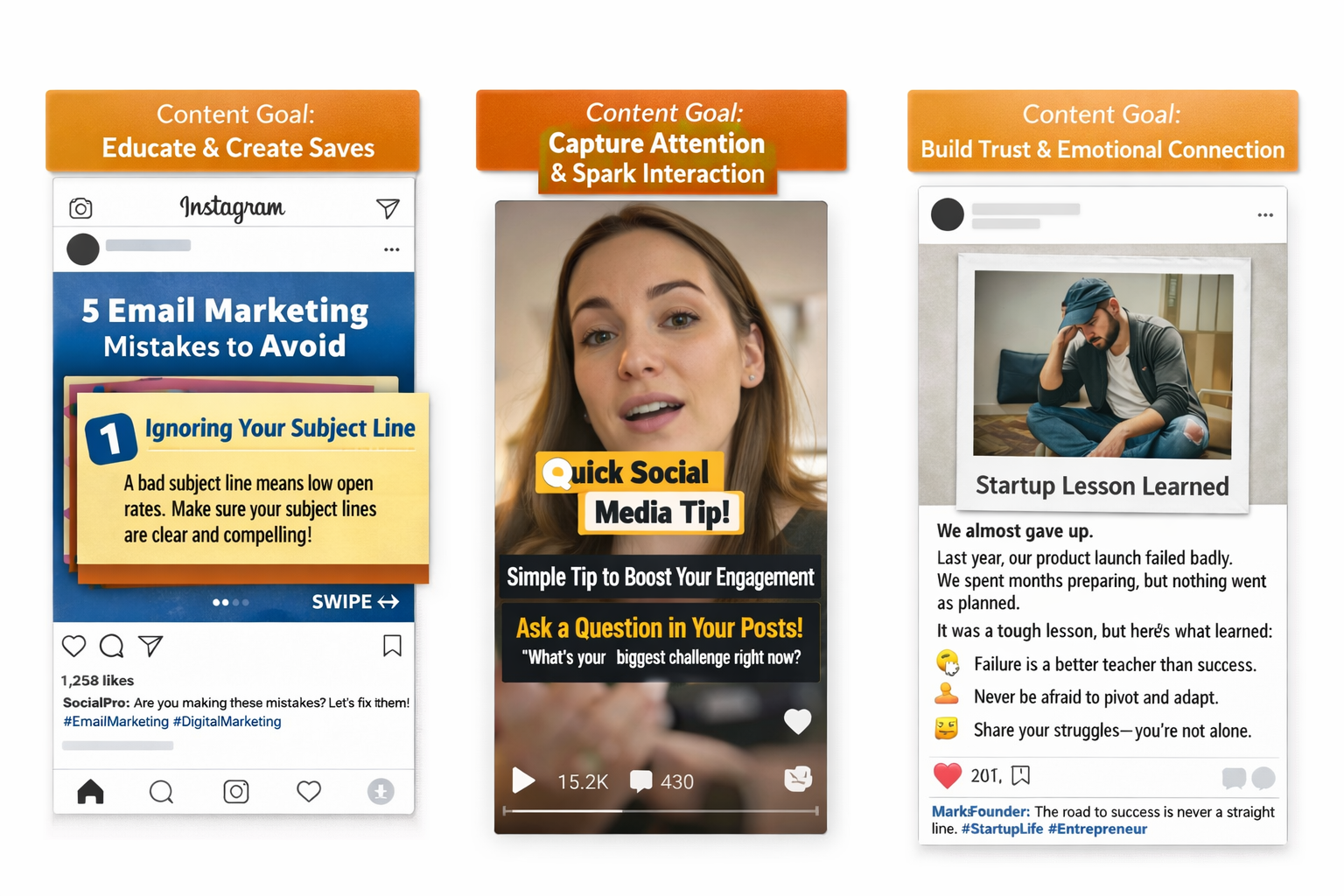
Let’s elaborate more of each example above:
Table of Contents
1. Educational Carousel Post (Industry Mistakes)
Primary Content Goal:
To educate and create saves through engaging content.
Do you struggle with managing multiple social media platforms for your brand's presence?
The Sociosight app can help you simplify the process and save you time. With Sociosight, you can publish, schedule, and monitor posts and engage with your followers across multiple social media platforms, all from one dashboard.
Get started today with a free sign-up!
Register Now for Free

Explanation:
This engaging content is designed to help the audience quickly recognize and avoid common industry mistakes. The goal is not immediate conversion, but knowledge transfer. By breaking down one mistake per slide, the content becomes easy to digest and highly save-worthy. Saves and shares signal strong engagement and help extend reach organically.
Marketing Outcome:
- Increase saves and shares
- Position the brand as a helpful authority
- Build long-term trust through educational engaging content
2. Short Video with One Actionable Tip
Primary Content Goal:
To capture attention and spark interaction using engaging content.
Explanation:
This engaging content aims to stop the scroll and prompt immediate response, such as comments or likes. By focusing on one actionable tip, the video keeps cognitive load low while delivering quick value. The call-to-action (e.g., asking a question) encourages viewers to participate rather than passively consume.
Marketing Outcome:
- Drive comments and engagement signals
- Improve reach through algorithm-friendly engaging content
- Strengthen brand recall with practical micro-learning
3. Personal Story / Lesson Learned Post
Primary Content Goal:
To build trust and emotional connection through engaging content.
Explanation:
This engaging content is not meant to sell or teach directly, but to humanize the brand. Sharing a personal challenge or lesson learned makes the message relatable and authentic. Audiences often respond with empathy, comments, and shares because the content reflects real experiences rather than polished marketing messages.
Marketing Outcome:
- Increase meaningful comments and conversations
- Strengthen emotional connection with the audience
- Build credibility and loyalty through honest engaging content
In summary, each piece of engaging content serves a different goal:
- Educate → Saves & authority
- Activate → Comments & reach
- Connect → Trust & loyalty
Together, they demonstrate that redefining quality means aligning engaging content with clear, intentional outcomes, not just visual execution.
#2. Understand Your Audience
Before creating engaging content, marketers must clearly understand who they are creating it for and where that audience is in their customer journey. Engaging content becomes effective only when it aligns with real audience expectations, motivations, and pain points at different stages—from awareness to consideration and decision-making.
Knowing your audience is no longer optional; rather, it has become a necessity if you really want to add value to their lives. So, determine various demographics accessing your website and communication channels, such as social media, and understand challenges they face, topics that interest them, and things they need from you. After doing so, build various personas and craft content capable of solving specific problems or catering to a clear need of each persona to make it truly valuable.
To strengthen this approach, engaging content should be mapped directly to customer personas. A persona represents a specific segment of your audience with shared goals, behaviors, and challenges. For example, a small business owner looking for efficiency will respond to engaging content that offers quick tips and practical solutions, while a marketing manager may prefer in-depth insights, frameworks, or performance benchmarks.
Equally important is aligning engaging content with the customer journey. At the awareness stage, engaging content should focus on education and problem identification, such as explainer posts or short videos highlighting common challenges. During the consideration stage, engaging content can provide comparisons, use cases, or success stories that help audiences evaluate solutions. At the decision stage, engaging content should reinforce trust through testimonials, behind-the-scenes insights, or clear next steps.
Persona + Customer Journey Example Table
| Persona | Key Challenge | Customer Journey Stage | Engaging Content Goal | Example of Engaging Content |
|---|---|---|---|---|
| Solo Business Owner | Limited time and resources | Awareness | Help them recognize a problem | Short carousel explaining common marketing mistakes small businesses make |
| Solo Business Owner | Unsure which tools or tactics to use | Consideration | Educate and guide decisions | Comparison post or video explaining different marketing approaches |
| Solo Business Owner | Needs confidence before taking action | Decision | Build trust and reduce doubt | Customer testimonial, case study, or behind-the-scenes post |
| Marketing Manager | Pressure to deliver measurable results | Awareness | Spark interest with insights | Industry trend post or data-driven engaging content |
| Marketing Manager | Evaluating strategies and tools | Consideration | Provide clarity and proof | How-to guides, best practices, or use-case engaging content |
| Marketing Manager | Justifying decisions internally | Decision | Reinforce credibility | Success stories, performance breakdowns, or expert opinions |
Customer Journey Example with Engaging Content
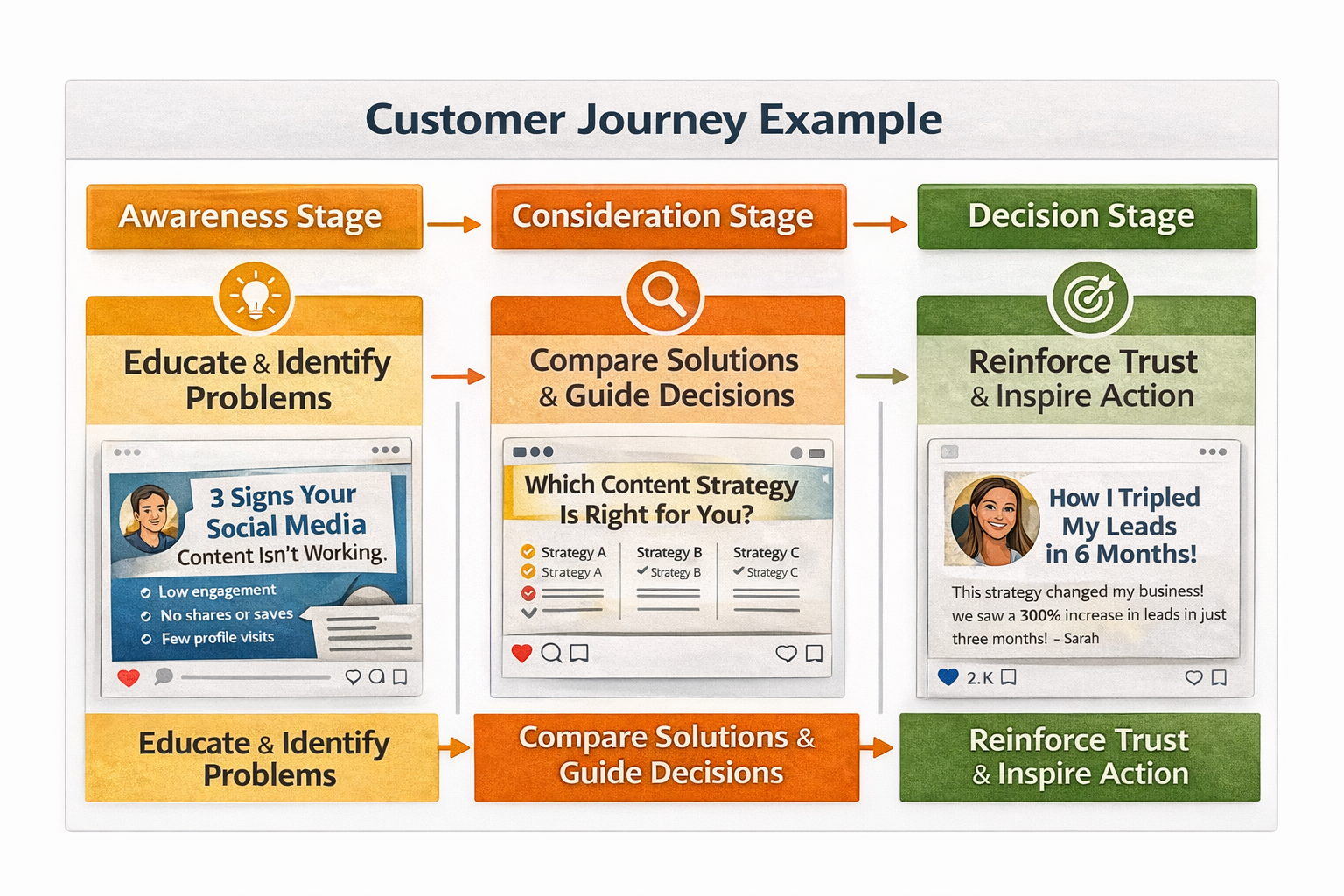
Awareness Stage
At this stage, the audience is becoming aware of a problem but may not yet be actively searching for a solution. Engaging content here should focus on education and problem identification rather than selling.
Example of Engaging Content:
A short video or carousel titled “3 Signs Your Social Media Content Isn’t Working” that highlights common pain points. This engaging content helps the audience see themselves in the problem and encourages saves or shares.
Consideration Stage
Here, the audience understands the problem and is exploring possible solutions. Engaging content should help them evaluate options and gain clarity.
Example of Engaging Content:
A comparison post or explainer video showing different content strategies, tools, or approaches. This engaging content might include pros and cons, simple frameworks, or real examples to support informed decision-making.
Decision Stage
At the decision stage, the audience is close to taking action but needs reassurance. Engaging content should focus on trust, credibility, and confidence.
Example of Engaging Content:
A personal story, testimonial, or case study explaining how a real user achieved results. This engaging content reduces uncertainty and helps
Why This Matters
When engaging content is aligned with personas and the customer journey, it stops being random and starts becoming strategic. Each piece of engaging content serves a clear purpose—educating, guiding, or reassuring—making marketing efforts more efficient and impactful.
#3. Embrace Storytelling and Relatability
Before audiences engage with a brand, they connect with stories that feel real. In practice, engaging content built on storytelling performs better because it reflects lived experiences rather than polished messaging. People relate more easily to moments of struggle, growth, and learning than to abstract claims or generic advice.
The modern-day audience no longer finds reiterations of existing topics or information. Given this, it is essential for you to infuse your personality into content by sharing personal anecdotes, challenges, and achievements to establish a genuine, emotion-based connection with them. Stories attract people more than dry facts and figures, and they remember your content for a long time. Additionally, such content is relatable, which leads to trust-building and brand loyalty.
Real-World Examples of Story-Driven Engaging Content
In real-world marketing, engaging content often takes the form of simple personal stories. For example, a founder sharing a short post about a failed product launch and what they learned from it can attract more comments than a promotional announcement. Similarly, a brand posting a behind-the-scenes video showing how a team solved a last-minute problem often feels more relatable than a perfectly edited campaign video.
Another common example of engaging content through storytelling is customer-driven narratives. A short testimonial written as a story—explaining the problem, the struggle, and the outcome—tends to feel more authentic than a list of features or benefits. Audiences trust stories because they mirror real experiences, not marketing claims.
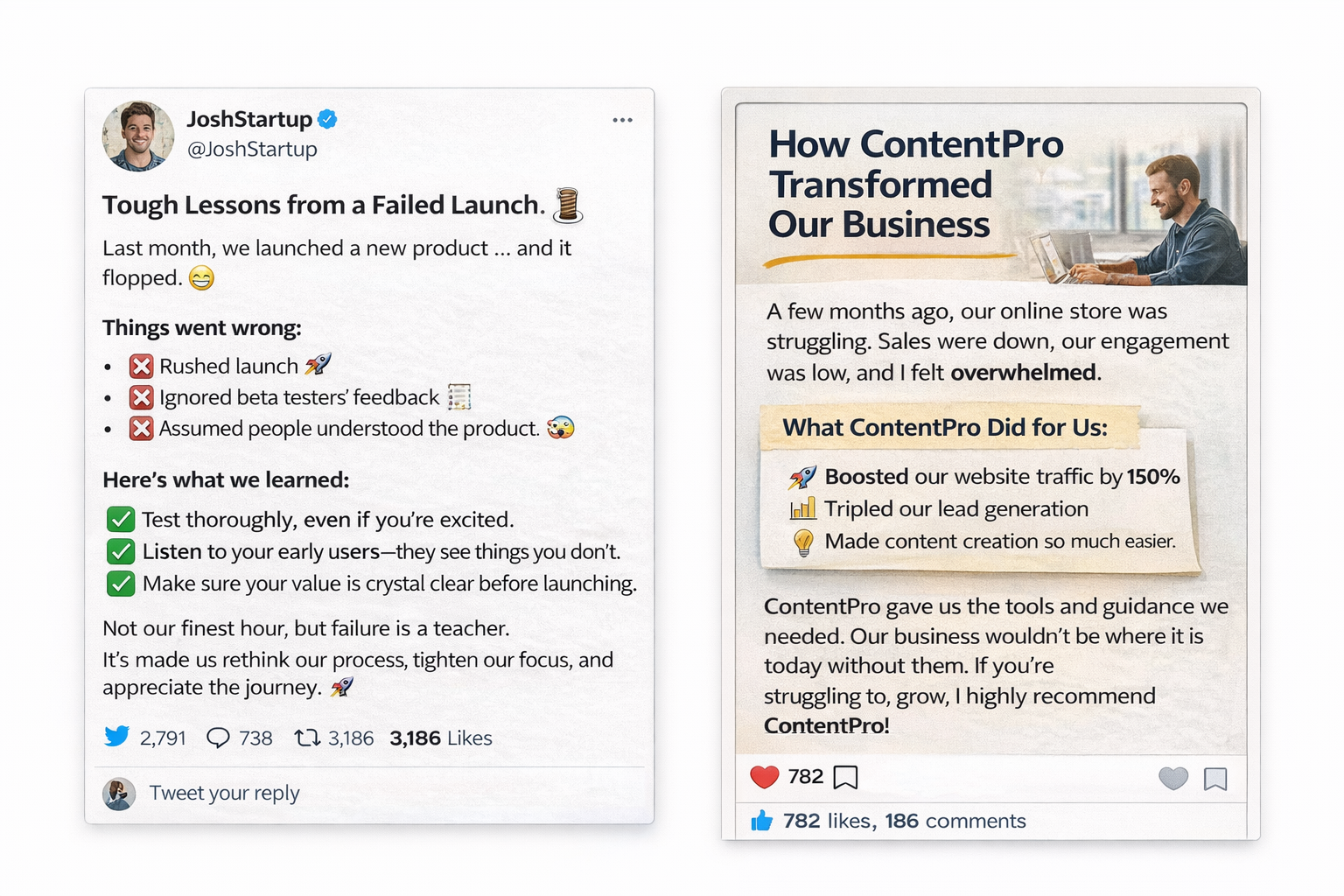
Ultimately, storytelling works because engaging content does not try to impress—it tries to connect. When brands consistently share honest stories, lessons learned, and human moments, audiences begin to recognize themselves in the content. This emotional connection strengthens trust, encourages long-term engagement, and turns content into a relationship rather than a message.
#4. Focus on Bluntness and Originality
Instead of going with the flow, try to stand out from the crowd and cut through white noise. It is only possible when you offer something unique to the target audience. Come up with a fresh perspective and thoughts that oppose the status quo in your industry, domain, or niche. Doing so will make people share your content with others because it will make you look different from the competition. So, be blunt, bold, and original.
Real-World Examples of Blunt & Original Engaging Content
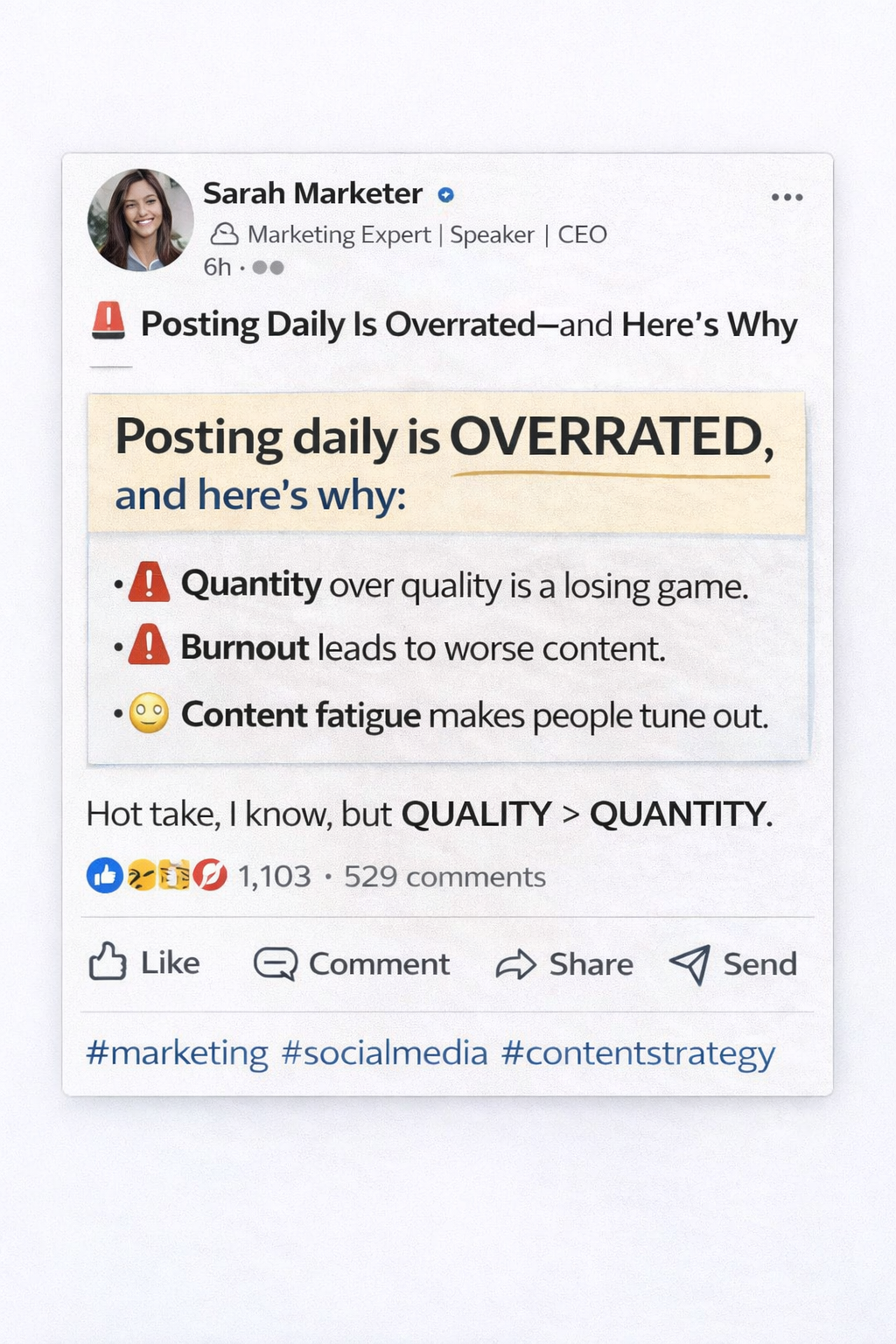
Contrarian Post Example
A LinkedIn post titled “Posting Daily Is Overrated—and Here’s Why” challenges a popular belief. The engaging content sparks debate, comments, and shares because it directly contradicts common advice while offering a clear argument.
Opinion-Based Carousel
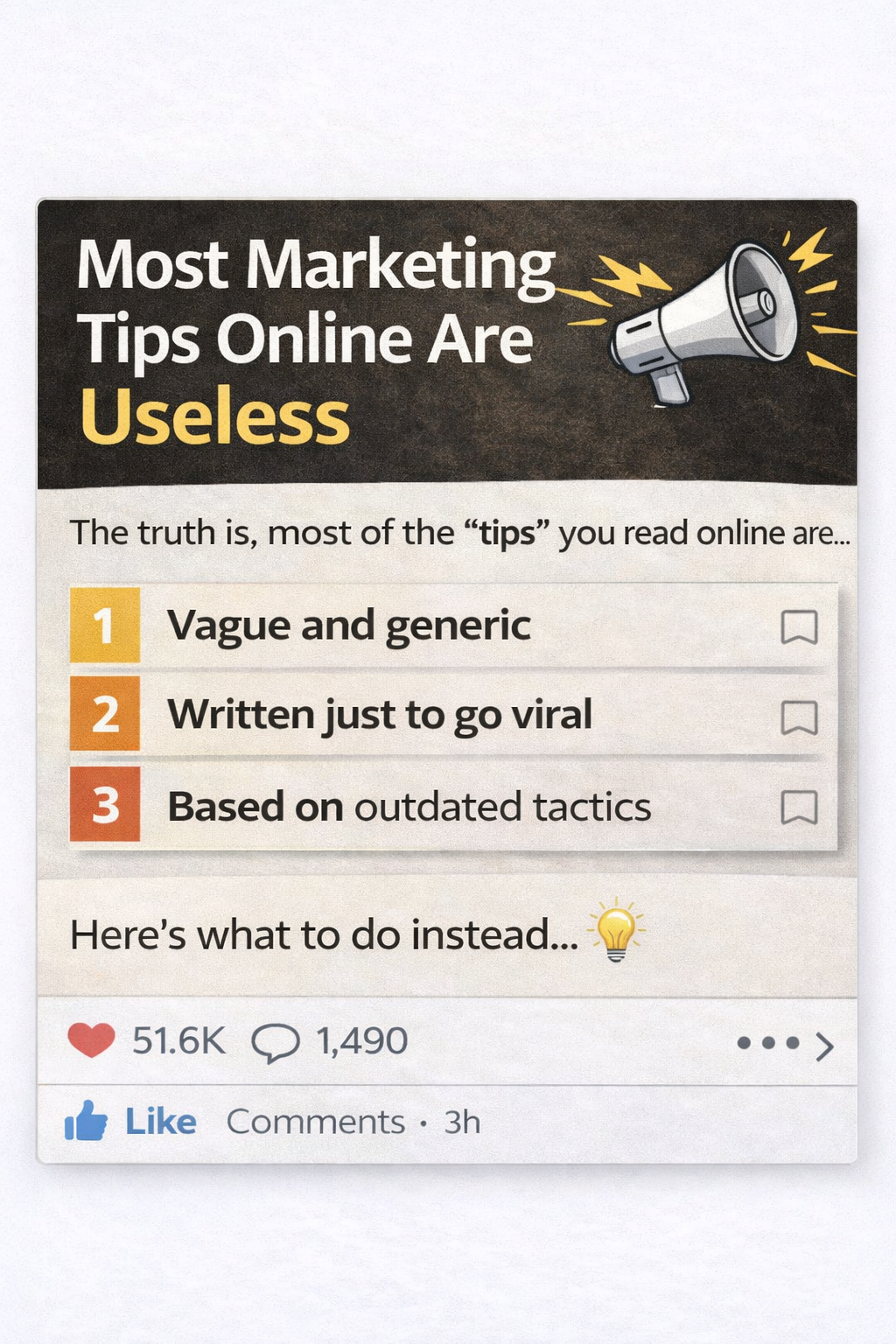
A carousel that starts with “Most Marketing Tips Online Are Useless” and then explains why, using short, punchy slides. This engaging content performs well because it feels bold, honest, and refreshing.
Call-Out Style Video
A short video saying “If Your Content Isn’t Getting Engagement, Stop Blaming the Algorithm” followed by a clear breakdown of what actually needs fixing. This type of engaging content grabs attention by being direct and unapologetic.

Industry Myth-Busting Post
A post that openly states “More tools won’t fix your marketing problem” and explains the real issue. This engaging content resonates because it says what many people think but rarely say out loud.
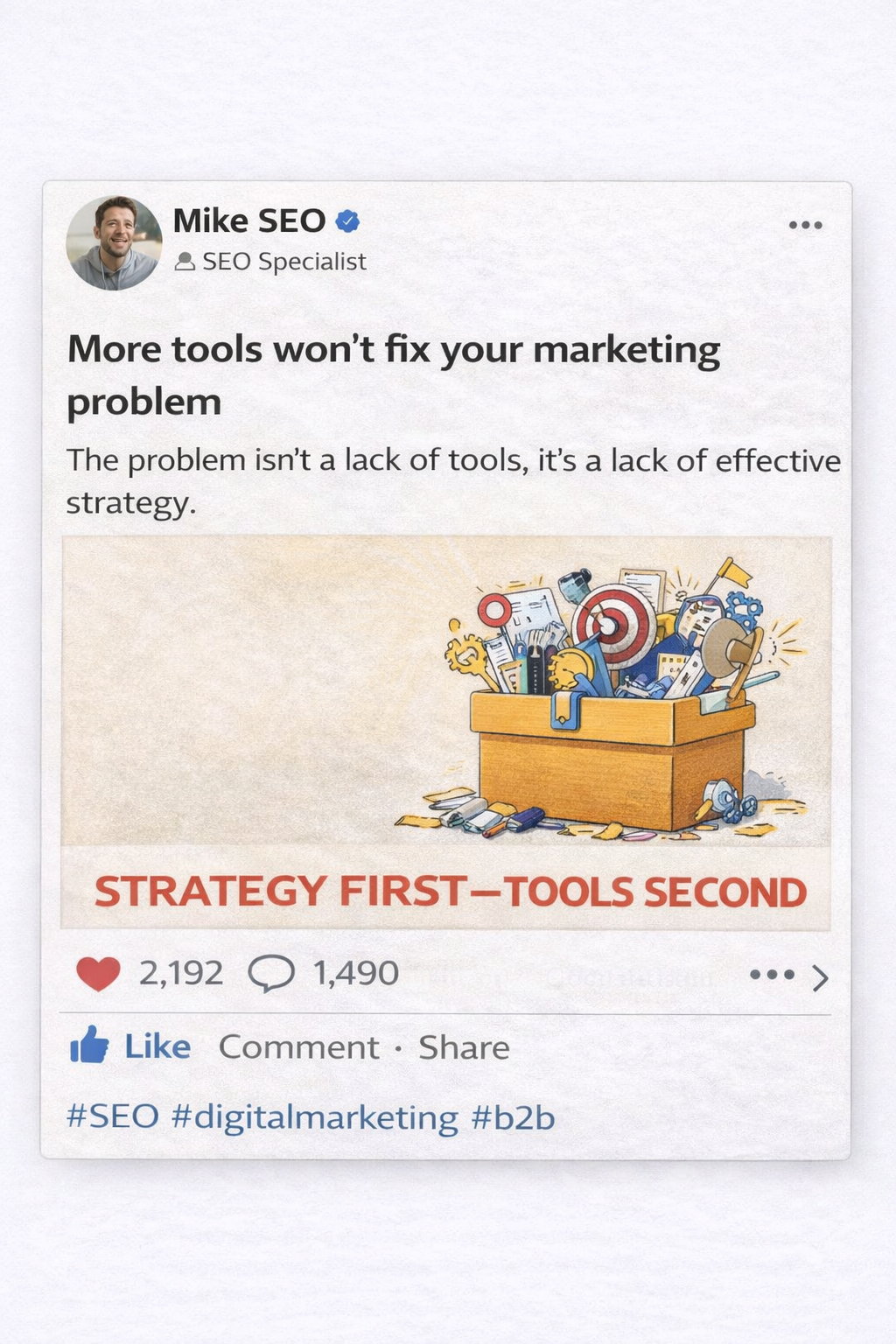
Blunt, original engaging content works because it interrupts agreement, invites reaction, and gives people something worth sharing—not because it plays safe, but because it dares to be different.
#5. Streamline Content Creation
Before focusing on creativity, marketers must address efficiency. Streamlining content creation is not about cutting corners—it is about building a system that allows engaging content to be produced consistently without exhausting time, energy, or creative focus.
Being efficient doesn’t mean you have to compromise on the quality of your content. You can still churn out a huge amount of content by leveraging tools and techniques to streamline your content creation without skimping on your core message.
To achieve this, several practical techniques can be grouped under content streamlining, especially for social media teams managing frequent publishing schedules.
3 Practical Ways to Streamline Content Creation Effectively.
5a. Formulate a Content Kit
A content kit helps remove friction from the creation process. It allows you to focus on ideas and messaging instead of rebuilding structure every time you create engaging content.
Instead of starting from scratch, think of creating an archive featuring templates, pre-researched facts, quotes, and frameworks. You can assemble your thoughts according to AIDA (Attention, Interest, Desire, Action) or PAS (Problem, Agitation, Solution) copywriting frameworks. Doing so will help you pace up production because you can easily add readily usable assets into your drafts.
In social media content creation, a content kit ensures consistency across posts while speeding up execution. It is especially useful when producing multiple formats such as carousels, captions, reels, or short videos around the same theme.
5b. Embrace AI-Powered Brainstorming
AI can significantly reduce the time spent on ideation, but it should support—not replace—human creativity. When used correctly, AI helps unlock ideas faster and enables teams to focus on refinement and storytelling.
Use advanced generative AI-based models to brainstorm ideas and craft outlines. However, never leave everything to AI. Always ensure a human touch to infuse your unique voice and style in the content. Otherwise, you may end up publishing a piece of content that may fail to impress your target audience.
For social media workflows, AI-powered tools like Sociosight can assist with brainstorming post ideas, expanding themes, and repurposing content efficiently. The key is to treat AI as a starting point, while humans shape the final engaging content to ensure authenticity and relevance.
5c. Focus on Batch Creation
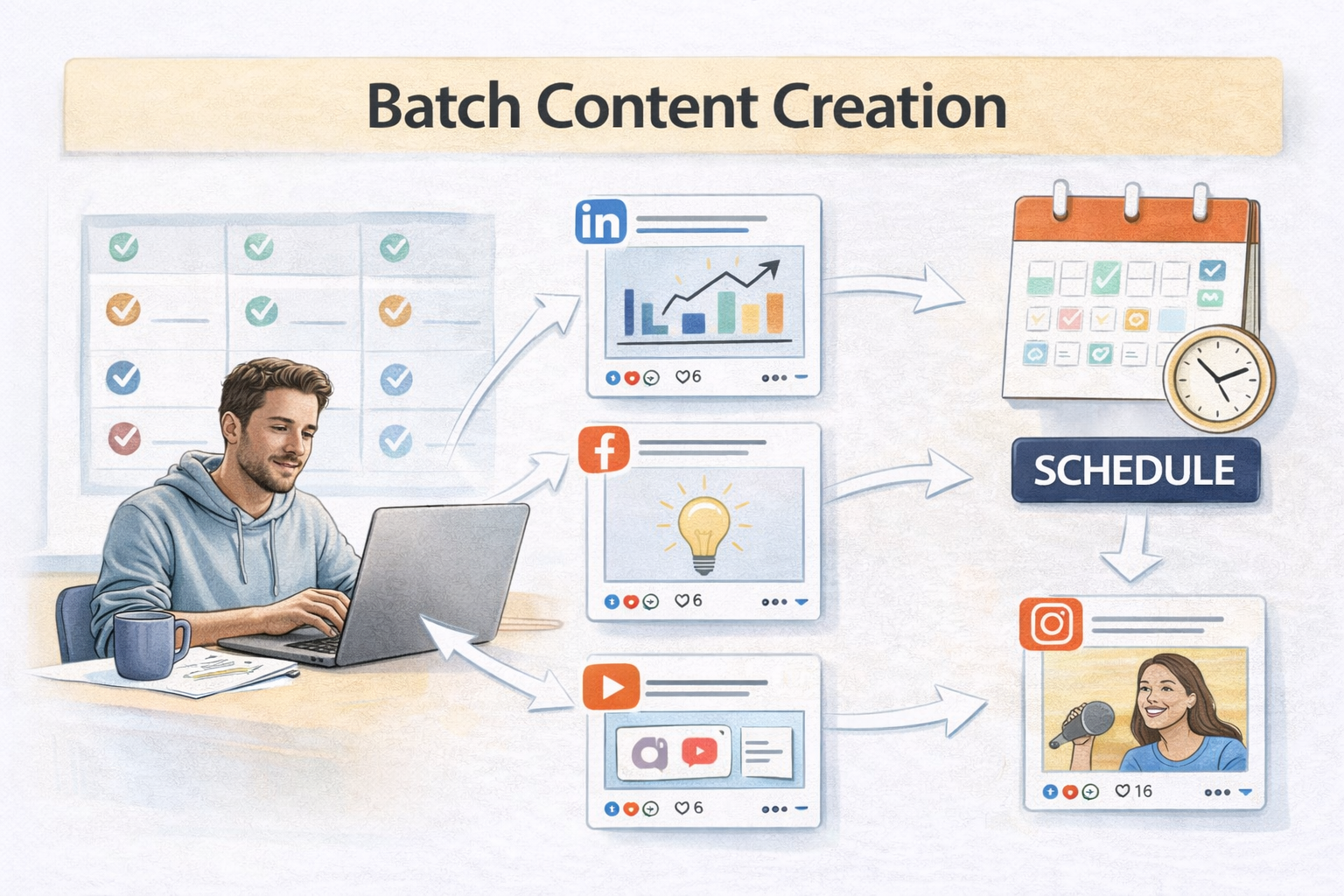
Batch creation helps maintain momentum and creative flow, making it easier to produce multiple pieces of engaging content without context switching.
Getting into the zone to trigger your creativity and come up with a draft that features perfectly curated thoughts, facts, figures, and examples. Hence, it is better to prioritize batch creation and craft multiple pieces of content on the same topic in a single session. Doing so will help you save plenty of time and effort and ensure quality content for the audience, even if you have to publish numerous posts on the same topic.
Once content is created in batches, scheduling becomes essential. Social media scheduling tools—such as Sociosight—allow teams to plan, queue, and publish engaging content consistently across platforms, ensuring visibility without daily manual effort.
Why Streamlining Matters
By combining content kits, AI-powered brainstorming, and batch creation into a single workflow, engaging content becomes easier to scale and manage. Streamlining turns content creation into a repeatable system—allowing brands to stay consistent, relevant, and efficient without sacrificing quality.
#6. Employ Quality Assurance
Before content is delivered across any channel, it must go through a quality checkpoint. Quality assurance ensures that engaging content remains clear, credible, and effective—whether it appears on a website, blog, email campaign, or social media feed.
Making your content perfect is not possible until you analyze it with a critical eye. Hence, if you want to churn out engaging content without compromising quality, you must implement a proper QA process. Leverage reputable editing and proofreading tools to ensure a clear review process. Additionally, add a dedicated editor to the process to check drafts for accuracy, tone, and structure before publishing them.
In practice, quality assurance plays a critical role across content formats. Blog articles require fact-checking and structural review to maintain authority. Email campaigns must be reviewed for clarity, timing, and tone to avoid miscommunication or brand risk. Website content needs consistency in messaging, terminology, and calls-to-action to support conversion goals. Social media content campaign requires careful review to ensure accuracy, context, and tone, as even minor mistakes can spread quickly and affect brand perception. Engaging content loses its impact quickly if it contains errors or unclear messaging, regardless of how strong the idea is.
Cross-Channel Quality Assurance Checklist
| QA Area | Blog Content | Email Campaigns | Social Media Content | Website Content |
|---|---|---|---|---|
| Accuracy & Fact-Checking | Verify data, sources, stats, and claims | Confirm offers, dates, pricing, and links | Check facts, captions, hashtags, and references | Validate product info, features, and service details |
| Clarity & Readability | Clear structure, headings, and flow | Concise messaging and scannable layout | Easy-to-understand copy for fast scrolling | Simple language with clear value propositions |
| Tone & Brand Voice | Consistent with brand positioning | Appropriate tone for audience and purpose | Matches platform culture and brand personality | Unified tone across pages and sections |
| Structure & Formatting | Logical flow, subheadings, bullet points | Subject line, preview text, and body alignment | Proper line breaks, emojis, and spacing | Clean layout and visual hierarchy |
| CTA & Intent Alignment | CTA supports article goal | Clear and relevant call-to-action | CTA matches post objective (comment, click, save) | CTA supports conversion or navigation goal |
| Links & Navigation | Working internal and external links | Correct links and tracking parameters | Accurate profile, link-in-bio, or tagged links | Functional menus, buttons, and internal links |
| Compliance & Risk Check | No misleading or unverified claims | CAN-SPAM compliance, unsubscribe links | Platform guidelines and disclosure checks | Legal pages, disclaimers, and policy alignment |
| Visual & Media Review | Images support content and load properly | Images display well across devices | Visuals align with message and platform specs | Optimized images and responsive design |
| Final Human Review | Editor review for flow and accuracy | Final proofread before scheduling | Quick sanity check before posting | Cross-page consistency and UX review |
How to Use This Checklist
Use this table as a final QA gate before publishing or scheduling engaging content. Whether you’re working with batch creation, AI-assisted drafts, or multi-channel campaigns, this checklist ensures consistency, clarity, and credibility across all touchpoints.
Quality assurance also becomes essential when content is produced at scale or supported by AI and templates. Human review ensures that engaging content aligns with brand voice, communicates the intended message, and meets audience expectations across channels. A structured QA process ultimately safeguards trust and reinforces professionalism at every touchpoint.
#7. Optimize Content for Engagement
Focusing solely on the quality should not be your approach. You should also tick the engagement box with your content. It is only possible when you work on ensuring elements that are essential to make engaging content. It is only possible when you intentionally design elements that make engaging content easy to interact with, respond to, and remember.
In practice, optimizing for engagement means shaping content around how people behave, not just what they read or watch. Engaging content often includes clear hooks, relatable language, and prompts that invite participation rather than passive consumption.
For example, a blog post optimized for engagement may open with a provocative question, include skimmable sections, and end with a clear call-to-action inviting readers to share their opinion. An email optimized for engagement might use a conversational subject line, short paragraphs, and a single focused CTA instead of multiple competing messages.
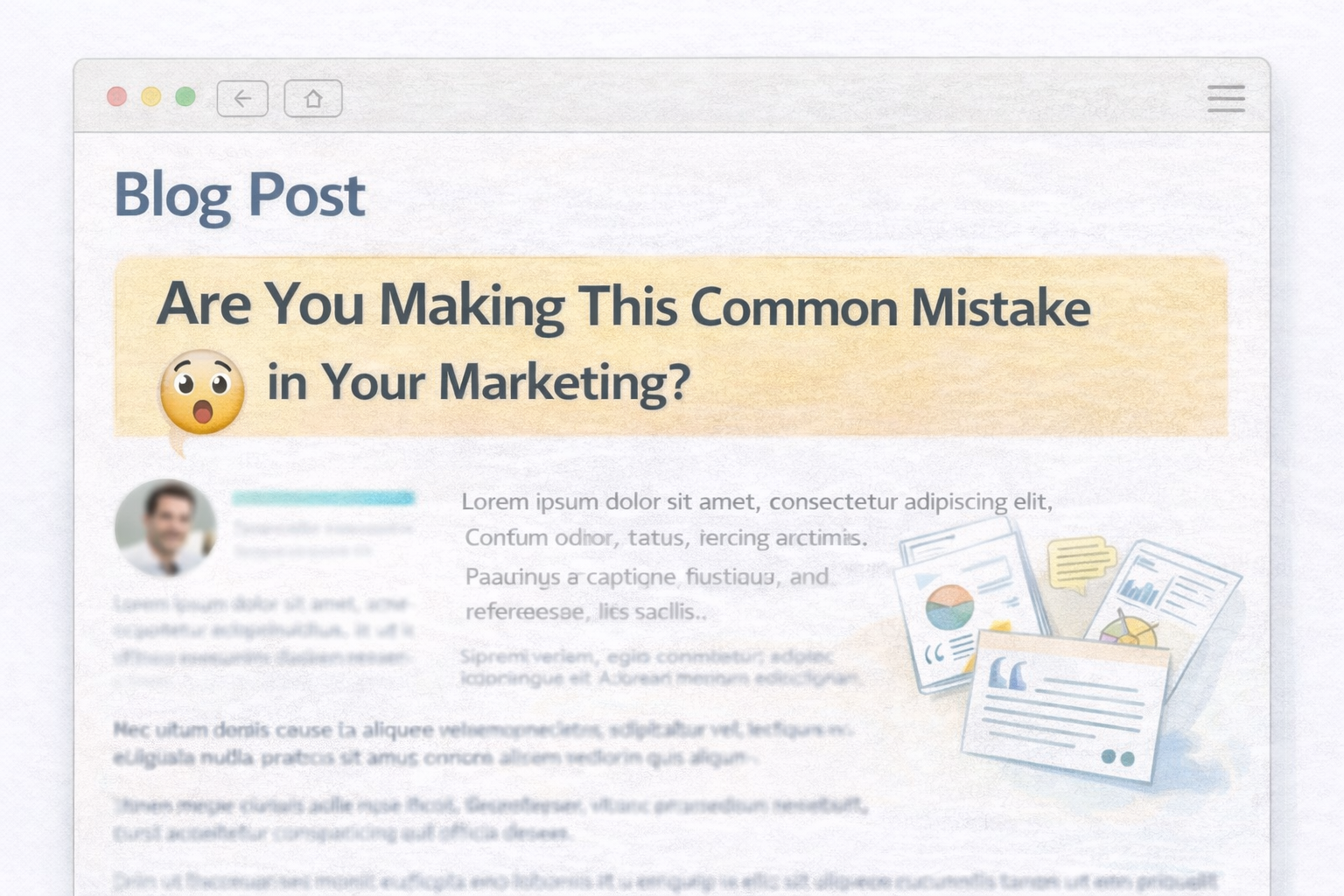
On social media, engaging content is optimized through platform-specific cues—strong opening lines, native formats (such as carousels or short videos), and explicit interaction prompts like “comment,” “save,” or “share.” Even small optimizations, such as breaking long captions into readable lines or aligning visuals with the message, can significantly improve engagement.
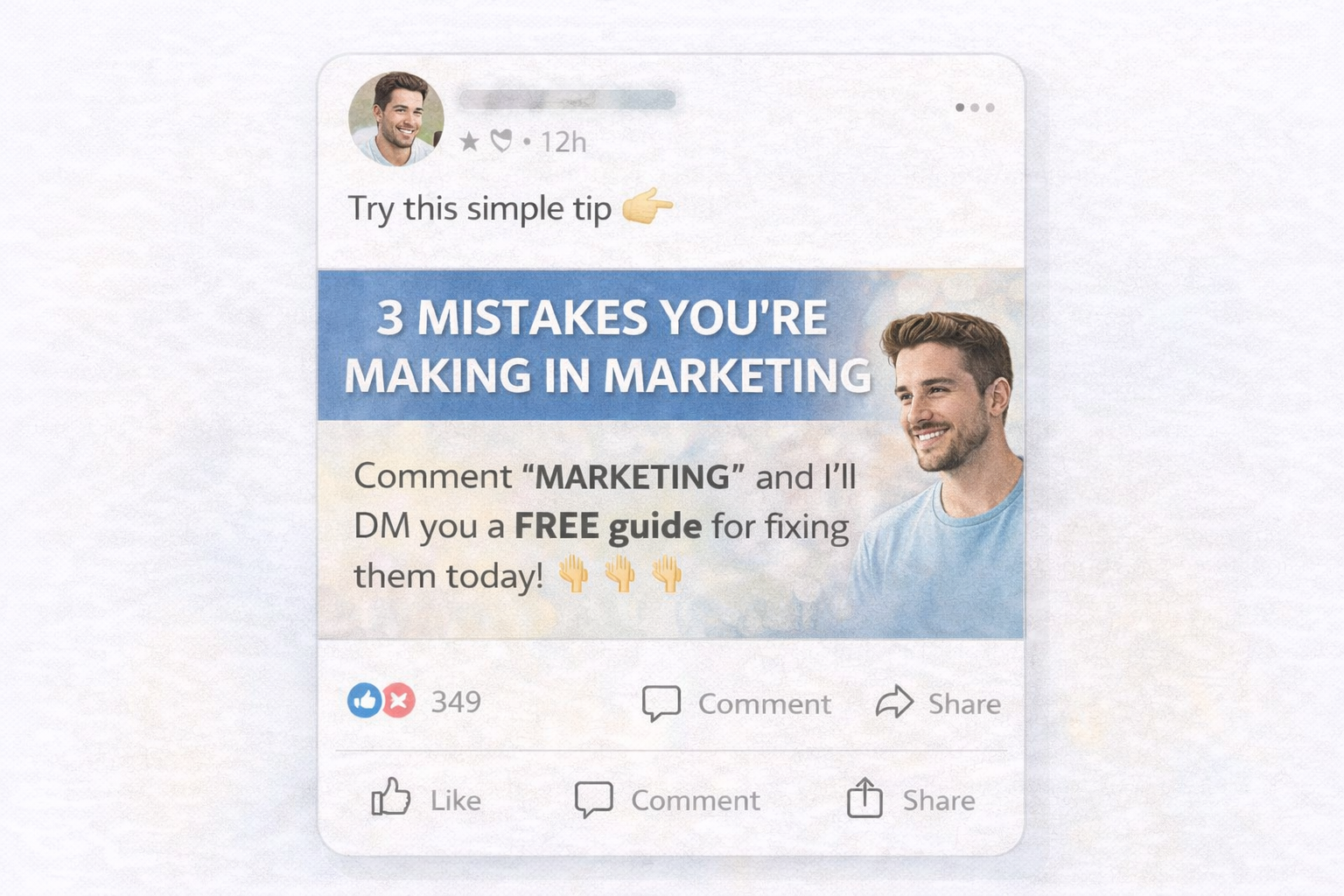
Optimizing content for engagement is not about manipulation; it is about intentional design. When content is structured to invite response, guide attention, and encourage action, engagement becomes a natural outcome rather than an afterthought.
#8. Initiate with Robust Hooks
A strong hook determines whether your content gets ignored or explored. In a world of endless scrolling, the first few seconds decide if engaging content earns attention or disappears unnoticed.
Your content should grab the attention of the target audience promptly. It is only possible when you shape it in such a way that makes the audience spend significant time on the first line of the post and keep on reading it for the first 15 seconds. You can trigger curiosity of the target audience by sharing surprising stats, asking a relatable question, or sharing struggles that sound resonant.
In practice, robust hooks work because they interrupt expectations. A blog post might begin with a question that challenges a common assumption, compelling readers to continue. An email may open with a short, unexpected statement that directly addresses a pain point. On social media, engaging content often starts with a bold claim, a relatable frustration, or a personal confession that feels familiar to the audience.
For example, instead of opening with generic advice, a post that starts with “Most content fails—not because it’s bad, but because no one notices it” instantly signals relevance. Similarly, sharing a brief struggle such as “I spent months posting consistently and still got no engagement” can make audiences pause, relate, and keep reading.
Hook Formula Box: Proven Ways to Start Engaging Content
| Hook Type | Formula | Example Hook | Best Used For |
|---|---|---|---|
| Relatable Question | Ask a question your audience is already thinking | “Why does your content get views but no engagement?” | Blogs, social posts, emails |
| Bold Statement | Challenge a common belief or assumption | “Posting consistently won’t save bad content.” | LinkedIn posts, opinion pieces |
| Surprising Statistic | Share an unexpected or counterintuitive data point | “Over 70% of content fails before the first 10 seconds.” | Blog intros, presentations |
| Personal Struggle | Admit a challenge or mistake openly | “I spent months creating content that nobody noticed.” | Social posts, newsletters |
| Pain-Point Callout | Directly name a specific frustration | “If your content feels invisible, this is for you.” | Landing pages, emails |
| Contrarian Take | Oppose popular advice | “More content is not the solution to low engagement.” | Thought leadership posts |
| Curiosity Gap | Hint at insight without revealing it | “The biggest reason your content fails has nothing to do with quality.” | Blogs, carousels |
| Short Story Opening | Start in the middle of a moment | “I almost deleted that post—then everything changed.” | Case studies, long-form posts |
How to Use This Hook Formula Box
Choose one hook type per piece of engaging content and align it with your audience’s context and platform. Strong hooks don’t exaggerate—they clarify relevance. When the opening line reflects a real concern or thought, audiences naturally stay for the message that follows.
Rember robust hooks are not about clickbait—they are about clarity and relevance. When the opening line speaks directly to what the audience feels, thinks, or experiences, engaging content naturally earns attention and sustains interest beyond the first few seconds.
#9. Embrace Conversational Language
Engaging content feels less like a broadcast and more like a conversation. When content sounds human, readers are more likely to stay, respond, and trust the message being shared.
Instead of being formal and using industry-specific jargon, prefer being conversational. Address your target audience through your content as if you are engaged in a friendly conversation. Use 3rd-person pronouns only when their addition becomes essential. Otherwise, prioritize using words like “I” and “You” to keep readers engaged and establish a personal connection with them.
In practice, conversational language works because it mirrors how people think and communicate daily. Blog posts written in a natural tone feel easier to read. Emails that sound like a one-to-one message feel less intrusive. On social media, engaging content written conversationally blends into feeds naturally instead of sounding like an advertisement.
For example, replacing “Businesses must implement effective strategies to improve engagement” with “If you want more engagement, here’s what actually helps” immediately makes the message more approachable. This small shift lowers resistance and increases attention across formats.
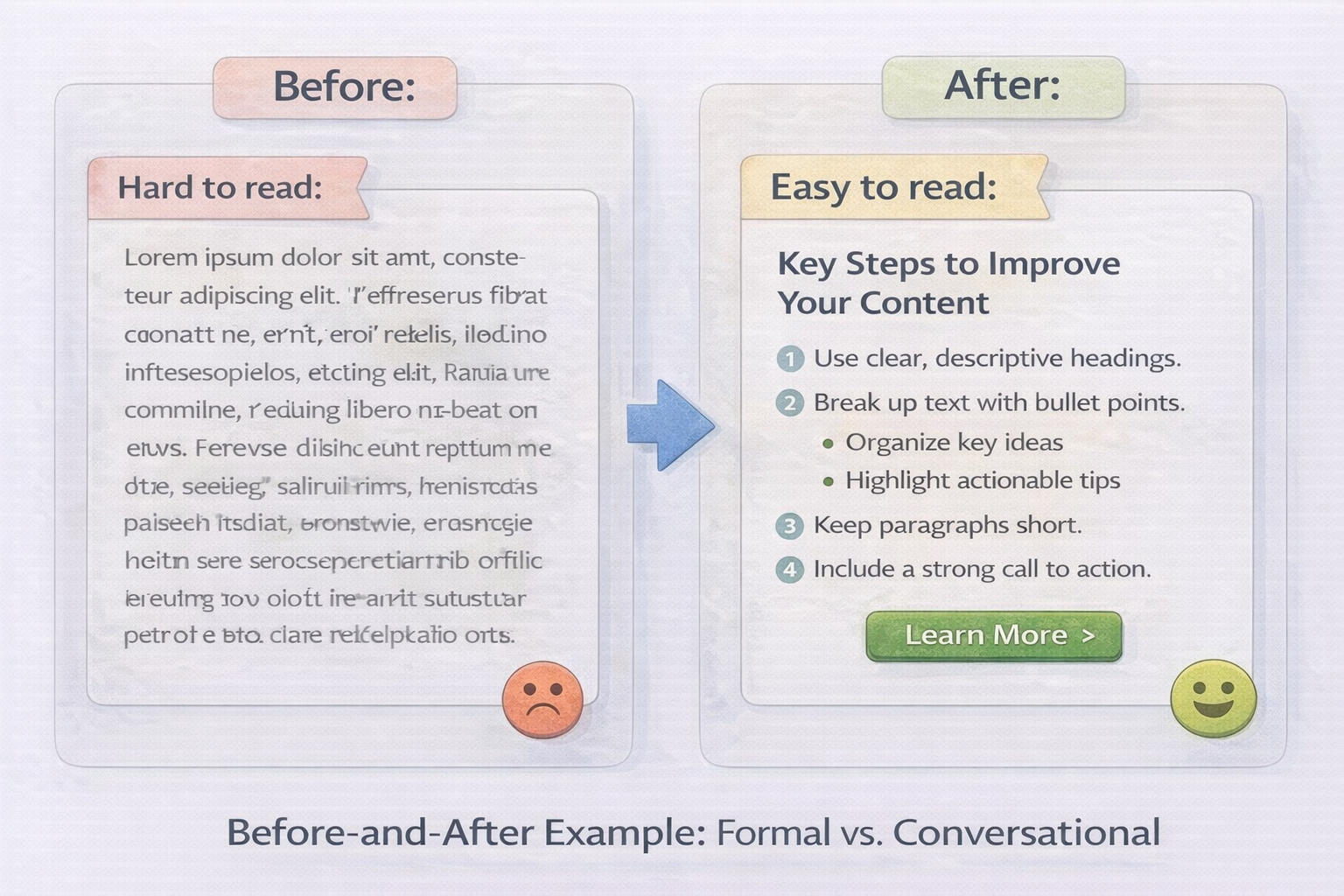
Conversational language does not mean being unprofessional—it means being clear, relatable, and direct. When engaging content sounds like it’s written for one person instead of an audience, it becomes easier to consume, easier to trust, and easier to act on.
#10. Draft & Refine
Strong engaging content rarely comes from perfection on the first attempt. The most effective approach is to separate creation from refinement, allowing ideas to flow freely before polishing them.
Instead of spending time thinking whether a particular word or phrase is worth adding to your content or aligns with the tone and structure of your content, simply include it in your first draft. Add everything relevant to the topic that comes to your mind and fill the page. Once you are done writing the initial draft, focus on refining. If you are concerned about the consistency of tone in your content, let advanced technology take charge and hand over the draft to an AI paraphraser. The AI-based tool will refine content, eradicate repetitive or complex phrases, and ensure a logical flow of your content to make it easily readable.
In practice, this method helps creators avoid creative paralysis. Whether you are writing a blog article, drafting an email campaign, or preparing engaging content for social media, the goal of the first draft is momentum—not clarity. Refinement comes later, when structure, tone, and readability can be improved with a clearer perspective.
AI-powered tools can support the refinement stage by smoothing transitions, simplifying language, and improving flow. However, human judgment remains essential to ensure that engaging content still reflects intent, emotion, and authenticity. When drafting and refining are treated as two distinct steps, content creation becomes faster, less stressful, and more consistent in quality.
#11. Ensure Easy Navigation and Readability
Even the most valuable engaging content can fail if it feels difficult to consume. Readers today skim before they commit, which makes structure and navigation just as important as the message itself.
In practice, easy navigation helps readers quickly understand what the content is about and decide where to focus. Blog posts benefit from descriptive subheadings and short paragraphs that guide the eye. Emails perform better when key points are broken into scannable sections. On social media, engaging content becomes easier to interact with when captions are spaced well and calls to action are clear.
Readability is not about oversimplifying ideas—it is about reducing friction. When readers can effortlessly move through content, they are more likely to stay longer, engage, and respond. Clear structure turns engaging content into an experience that feels helpful rather than overwhelming.
In addition to refinement, pay attention to easier navigation. Make your content easily readable by structuring it properly and adding clear headings, subheadings, bullet points, and calls to action. Doing so will not only grab the attention of the reader but also promote interaction by encouraging comments and shares.
In the End
The addition of interactive elements and visuals surely makes your content engaging, but does it tick the quality box? Usually, the answer is no, because there is no need to sacrifice quality to make content engaging. You simply need to make a few strategies that are discussed in this article a part of your toolkit, and you will be able to achieve this feat. So, follow the takeaways and make your content engaging and valuable!